
When a critical piece of equipment fails in a production facility, the first question is often:
“Who knows this machine best?”
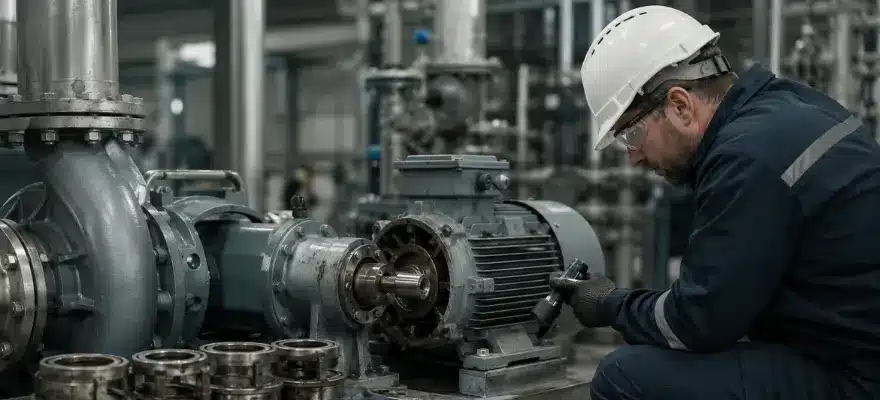
The name of an experienced technician usually follows. That is because this person knows the equipment’s previous failures, the unusual sounds it makes, which components have been replaced, and the intervention methods that may not appear in standard procedures.
But what happens when that employee is on leave, working a different shift, or no longer with the company?
The maintenance team may have to analyze the same failure again, search through previous interventions, and repeat solutions that have already been tested. A small gap in information can lead to longer repair times, incorrect spare-part use, and production losses.
For this reason, the most critical spare part for a maintenance team is not only a bearing, motor, or sensor.
The most critical spare part is knowledge.
However, knowledge cannot create lasting value when it exists only in employees’ memories. It must be recorded, shared, kept up to date, and made easily accessible whenever it is needed.

Why Does Maintenance Knowledge Remain in Employees’ Memories?
Experienced maintenance professionals build valuable knowledge about equipment over many years. They learn which failures occur under particular conditions, which components wear out earlier than expected, and which minor symptoms may indicate a much larger problem.
This knowledge is often based on:
- Experience gained from previous failures
- Equipment-specific intervention methods
- Spare parts and compatible alternatives
- Symptoms observed before a failure
- The impact of production conditions on equipment
- Previous interventions that did not produce results
- Information shared verbally between shifts
The problem is that much of this information is not stored in a standardized system.
When a technician closes a work order with only the comment “failure resolved,” the true value of the intervention is lost. The next employee cannot see why the failure occurred, which inspections were completed, or what solution was applied.
As a result, the organization attempts to solve the same problem from the beginning every time.
When the Expert Leaves, the Knowledge Should Stay
Employee turnover, retirement, leave, shift changes, and changing responsibilities can directly affect the continuity of maintenance knowledge.
Technicians who have worked in the same facility for many years often become the organization’s invisible technical memory. However, when this knowledge depends entirely on individuals, it creates a serious operational risk.
A newly hired maintenance employee should be able to find quick answers to questions such as:
- What failures has this equipment experienced before?
- How many times has the same problem occurred?
- Which parts were used during the previous intervention?
- Was the root cause identified?
- Which technician performed the work?
- How long did the intervention take?
- Where are the equipment photographs and technical documents?
- Which inspection steps should be followed in a similar situation?
When the answers are scattered across Excel files, messaging groups, printed forms, or personal notes, accessing information becomes difficult.
Sustainable maintenance management begins by making knowledge independent of individual employees.
Keeping Records Is Not the Same as Building Corporate Memory
Many organizations believe they already maintain adequate maintenance records. However, recording only the failure date and the completion of a work order does not create genuine corporate memory.
A valuable maintenance record should include at least:
- A clear description of the failure
- Symptoms observed before the failure
- Suspected and confirmed causes
- The intervention performed
- Spare parts used
- Labor and downtime duration
- Before-and-after photographs
- Inspections and measurements completed
- Recommended actions to prevent recurrence
- Relevant equipment and sub-equipment information
These details transform every completed work order into a valuable source of information for future maintenance activities.
| When knowledge remains with individuals | When knowledge is stored in a system |
|---|---|
| The experienced employee must be contacted. | Authorized team members can access previous records. |
| Details may be lost during shift changes. | Intervention information is preserved between shifts. |
| The same failure must be analyzed again. | Previous solutions and results can be reviewed. |
| Training new employees takes longer. | Historical records become training resources. |
| The organization becomes dependent on individuals. | Technical knowledge becomes a corporate asset. |
Stop Experiencing the Same Failure for the First Time
One of the greatest sources of wasted time in maintenance operations is investigating a problem that has already occurred before.
A piece of equipment may experience the same failure several times within three months. However, when previous work orders have not been recorded consistently, this pattern may remain invisible.
The technician resolves the failure, the equipment returns to operation, and the work order is closed. A few weeks later, the same problem occurs again. A different temporary solution may be applied each time, while the underlying cause remains unidentified.
A digital maintenance history helps teams answer not only “What happened?” but also:
- Has this problem occurred before?
- Under which conditions does it recur?
- Were previous solutions permanent?
- Why is the same component being replaced frequently?
- Is the failure associated with a specific shift or production condition?
- Should the preventive maintenance plan be revised?
This visibility allows the maintenance team not only to respond to failures but also to learn from them.
Prevent Information Loss During Shift Handovers
Maintenance operations are often managed across multiple shifts. An intervention that begins during one shift may continue into the next.
In a process that relies primarily on verbal communication, important details can easily be lost, including:
- Which inspections have already been completed
- Which parts are still being awaited
- How the equipment is operating temporarily
- Ongoing safety risks
- Technical feedback expected from the supplier
- Actions that must be completed by the next shift
Missing information does more than increase intervention time. It can also lead to repeated inspections, incorrect actions, or overlooked safety-critical steps.
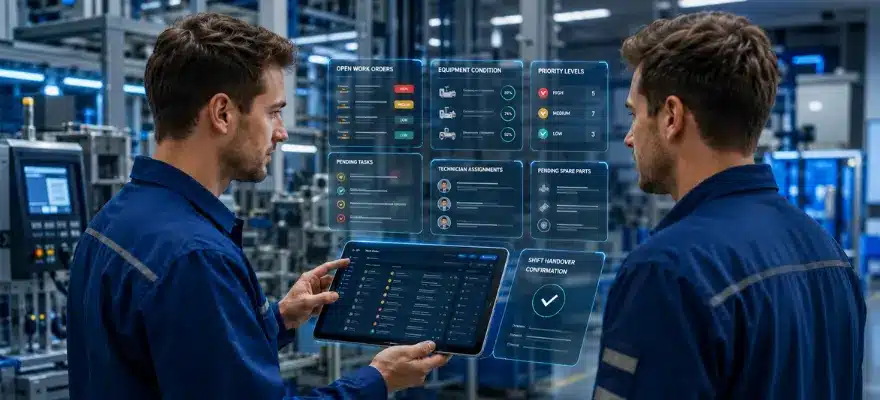
Digital records allow open work orders, pending actions, parts used, technician notes, and supporting images to be transferred seamlessly between shifts.
Maintenance operations can therefore rely on current and verifiable information instead of personal recollection.
Maintenance Records Are a Training Resource for New Employees
It takes time for a new maintenance employee to understand a facility and its equipment. Technical manuals provide essential information, but they do not always reflect the equipment’s real operating history.
Historical maintenance records can transfer practical knowledge about the facility.
New employees can use the system to:
- Review previous equipment failures
- See the interventions that were applied
- Identify the spare parts that were used
- Access inspection checklists
- View photographs and technical documents
- Evaluate the steps followed during similar failures
This does not mean replacing experienced employees. On the contrary, it protects the valuable knowledge they have developed over the years and makes it available to a wider team.
Transform Maintenance Knowledge into Corporate Memory with Repairist
Repairist CMMS enables maintenance data to be stored within a centralized and traceable structure.
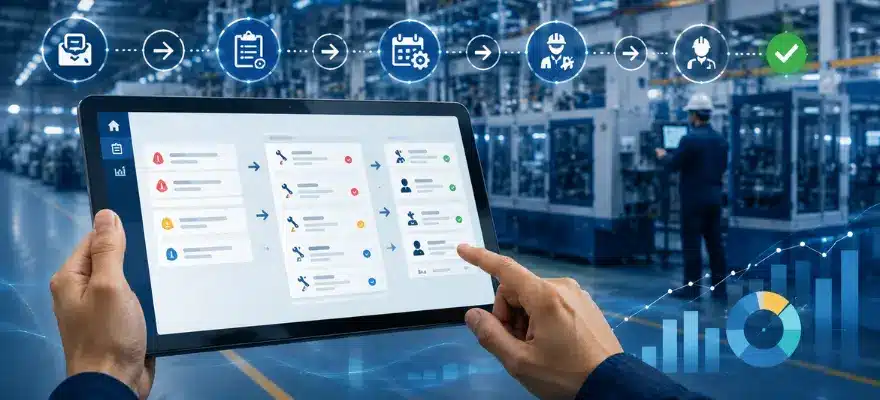
Equipment histories, failure records, preventive maintenance activities, spare parts used, technician notes, downtime durations, photographs, and related documents can all be managed through the same system.
Through the mobile application, maintenance employees can record their work directly in the field. This eliminates the need to remember details at the end of a shift or transfer information into separate files later.
With Repairist:
- Equipment-specific maintenance histories can be created.
- Intervention details can be recorded in a standardized way.
- Photographs and technical documents can be attached to work orders.
- Spare-part usage can be monitored.
- Open and completed work orders can be reviewed.
- Recurring failures can be analyzed through historical records.
- Knowledge continuity can be maintained between shifts and teams.
- New employees can benefit from previous experience more easily.
As a result, maintenance knowledge no longer remains an experience known only by certain employees. It becomes a protected, continuously developed, and reusable technical asset for the organization.
Record Your Most Valuable Knowledge Before It Is Lost
Maintenance teams regularly monitor spare-part stock levels. Running out of a critical component is considered a major risk to production.
However, losing critical technical knowledge can be just as damaging as running out of a spare part.
A component can be purchased again. Rebuilding years of experience, previous intervention knowledge, and equipment-specific expertise is not always as easy.
Organizations must therefore manage not only their equipment but also the knowledge generated around that equipment.
A strong maintenance organization is not simply one that resolves failures quickly.
It is one that learns from every intervention, shares its knowledge, and transfers experience into the future.
Next Steps
Have you received sufficient information about “The Maintenance Team’s Most Critical Spare Part: Knowledge”?
repairist is here to help you. We answer your questions about the Maintenance Management System and provide information about the main features and benefits of the software. We help you access the repairist demo and even get a free trial.
Aybit Technology Inc.
Corporate memory in maintenance refers to the systematic recording of equipment histories, failure causes, intervention methods, spare parts used, and technician experience by the organization.
Access to knowledge may be interrupted during leave, shift changes, role changes, or employee departures. Recorded information remains available to authorized team members.
A CMMS provides the necessary infrastructure. However, the system can only create value when maintenance employees enter records regularly, clearly, and with sufficient detail.