
Maintenance costs are one of the most critical expense items for many businesses, from production facilities and power plants to hotels and logistics operations. However, these costs are often evaluated only as “expenses incurred when a failure occurs.” In reality, the true cost consists of many factors combined, such as downtime, labor loss, spare part usage, production delays, quality problems, and even customer dissatisfaction.
Frequent equipment failures are not only a technical issue. They are also an operational efficiency problem directly linked to planning, inventory management, maintenance strategy, and data usage. Therefore, businesses that want to reduce maintenance costs should focus not only on cutting expenses, but also on making maintenance processes more controlled and predictable.
In this article, we discuss the causes of high maintenance costs, the strategies that can be applied to reduce these costs, and how technology use contributes to maintenance operations.

Understanding Maintenance Costs
To manage maintenance costs, it is first necessary to understand where these costs come from. In many businesses, maintenance expenses are calculated only based on spare parts, service fees, or technician labor costs. However, this approach presents an incomplete picture.
Maintenance costs can generally be evaluated under two main categories: direct costs and indirect costs.
| Cost Type | Description | Example |
|---|---|---|
| Direct Maintenance Costs | Expenses made directly for maintenance activity | Spare parts, labor, external service |
| Indirect Maintenance Costs | Additional effects caused by failure or the maintenance process | Production loss, delivery delay, quality issue |
| Unplanned Downtime Costs | Losses caused by unexpected equipment shutdown | Line stoppage, overtime, urgent spare part supply |
| Inventory Costs | Costs caused by incorrect spare part management | Excess stock, missing critical spare part |
| Inefficiency Costs | Time loss caused by unplanned and repetitive work | Repeated intervention for the same failure |
One of the most common causes of high maintenance costs is an unplanned maintenance culture. In other words, waiting until equipment breaks down and then trying to intervene quickly. Although this approach may seem easy in the short term, it creates higher costs, lower equipment reliability, and greater operational stress in the long term.
Another important reason is the lack of regular tracking of maintenance history. If it is not known how often each piece of equipment fails, which parts are consumed more quickly, which technicians are assigned to which tasks, or which maintenance instructions are actually followed, it becomes difficult to control costs.
Therefore, the first step is to make maintenance costs visible. It is not possible to improve a process that is not measured.
Strategies and Solutions
Simply cutting the budget is not enough to reduce maintenance costs. In fact, cost reduction efforts made in the wrong way can lead to greater losses in the long term. For example, extending the maintenance interval of a critical piece of equipment may seem like a saving in the short term, but this decision may increase the risk of unplanned downtime.
For this reason, the process of reducing maintenance costs should be handled strategically.
1. Reduce Dependence on Reactive Maintenance
Reactive maintenance is based on intervening after equipment has failed. Although it may be acceptable for some low-risk equipment, it creates high costs for critical production assets.
Instead, a preventive maintenance approach should be adopted. Preventive maintenance ensures that equipment is inspected at defined intervals. And that potential problems are resolved before they turn into failures.
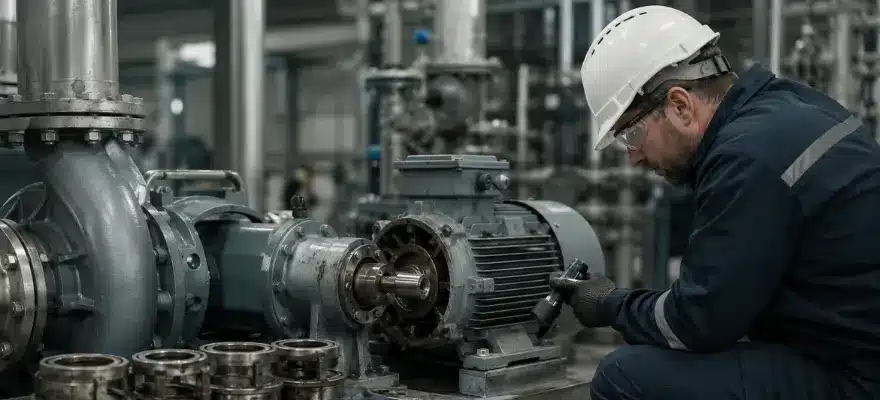
For example, in a production line, instead of replacing motor bearings only after a failure, monitoring them based on operating hours or vibration levels can reduce the risk of unplanned downtime.
2. Prioritize Critical Equipment
Not every piece of equipment is equally critical. Therefore, applying the same maintenance approach to all assets may create unnecessary costs.
Equipment can be classified according to the following criteria:
- Impact on production
- Safety risk in case of failure
- Spare part lead time
- Failure history
- Maintenance cost
- Availability of alternative equipment or bypass options
Thanks to this classification, maintenance resources can be directed to the most critical areas. This reduces unnecessary maintenance activities while allowing high-risk equipment to be monitored more closely.
3. Optimize Spare Part Management
A significant part of maintenance costs comes from spare part management. Excess stock ties up the company’s capital in the warehouse. Missing stock, on the other hand, can cause production to stop during a critical failure.
Therefore, a balance must be established in spare part management. Especially for critical parts, minimum stock level, maximum stock level, and reorder point should be defined.
For example, not having a frequently failing part with a long lead time in stock can turn a small technical issue into a major production loss. On the contrary, stocking too many rarely used expensive parts also creates financial inefficiency.
4. Update Maintenance Plans Based on Real Data
Maintenance plans should not be created once and then forgotten. As equipment ages, usage intensity changes, or production conditions differ, maintenance needs also change.
Therefore, maintenance plans should be reviewed regularly. Failure records, completed work orders, spare parts used, and technician feedback play an important role in updating maintenance plans.
Data-driven maintenance planning reduces unnecessary maintenance activities while ensuring that critical interventions are carried out on time.
5. Find the Root Cause of Repetitive Failures
If the same piece of equipment keeps failing with the same problem, simply replacing the part is not a permanent solution. In this case, root cause analysis should be performed.
The following reasons may be behind repetitive failures:
- Incorrect equipment use
- Insufficient operator training
- Unsuitable spare part
- Inadequate lubrication
- Incorrect assembly
- Weak maintenance instruction
- Environmental conditions
When the root cause isn’t found, the maintenance team repeatedly intervenes in the same failure. This increases both labor costs and equipment downtime.
Use Technology
The use of technology in maintenance operations is one of the most effective ways to control costs. Especially as the number of equipment, maintenance teams, locations, and work orders increases, manual tracking methods become insufficient.
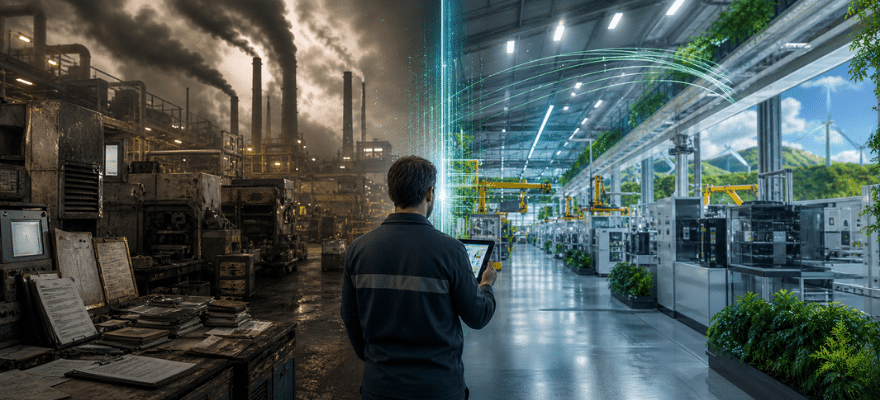
Excel files, paper forms, or scattered email records may work up to a certain point. However, these methods make it difficult to track maintenance history, measure performance, and make equipment-based decisions.
At this point, CMMS, or Computerized Maintenance Management System, comes into play.
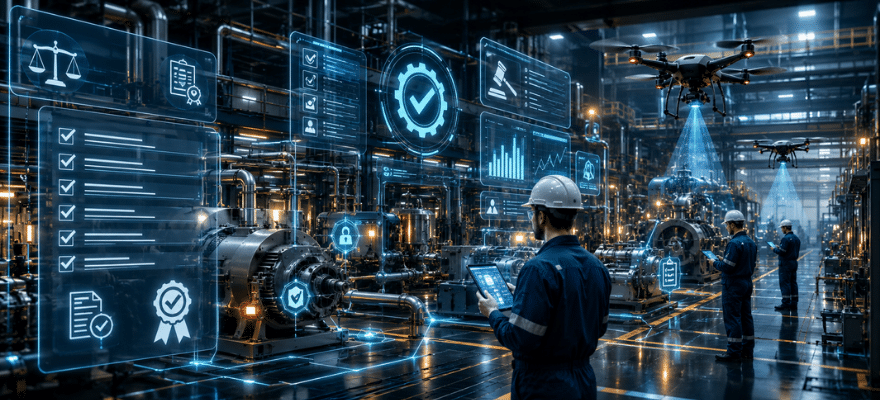
With a CMMS software, businesses can:
- Manage work orders centrally
- Create periodic maintenance plans
- Track equipment maintenance history
- Control spare part stocks
- Monitor technician workload
- Report unplanned downtime
- Analyze maintenance costs by equipment, location, or period
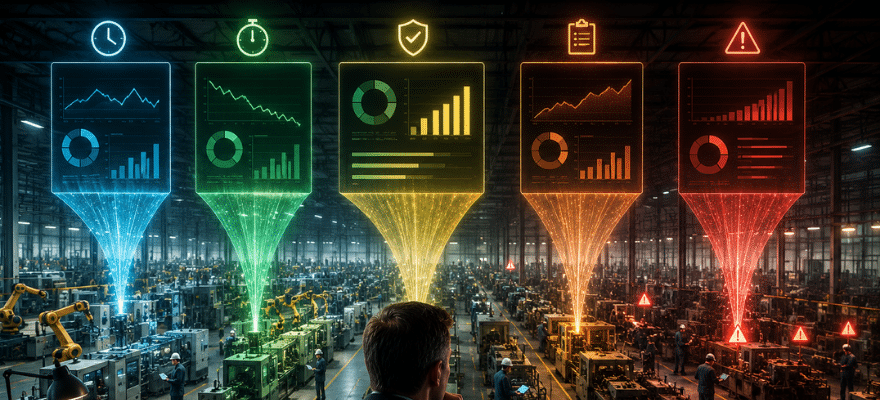
The most critical advantage for businesses aiming to reduce maintenance costs is visibility. Because when maintenance processes are digitalized, it becomes easier to analyze which equipment creates more costs, which parts are consumed frequently, which maintenance types are more intensive, and which failures repeat.
How Does CMMS Provide Cost Control?
| Problem | Traditional Approach | Approach with CMMS |
|---|---|---|
| Work orders are tracked in a scattered way | Paper, phone, email | Centralized work order management |
| Maintenance history is lost | Manual records | Equipment-based digital history |
| Spare part shortages occur | Instant control | Minimum stock and automatic tracking |
| Unplanned downtime increases | Intervention after failure | Preventive maintenance plans |
| Cost analysis cannot be performed | Assumption-based decisions | Reporting and KPI tracking |
Maintenance management systems such as Repairist CMMS make the daily operations of maintenance teams more planned while also providing managers with clear data they can use to make decisions. In this way, maintenance stops being only a technical operation and becomes a measurable and manageable performance area.
Success Stories and Case Studies
Businesses struggling with high maintenance costs usually have the same common problem: maintenance processes exist, but they are not visible and measurable enough.
For example, imagine that a critical packaging line in a manufacturing facility stops several times a month. At first glance, the problem may seem like only a mechanical failure. The maintenance team intervenes each time, replaces parts, and restarts the line. However, because detailed records are not kept, it is not clearly visible how often the same failure repeats, which parts are used, and what the total downtime costs the business.
When switching to digital maintenance management, the picture changes. When equipment-based work orders, failure records, and spare part usage are analyzed, it may be discovered that the problem actually stems from an incorrect maintenance interval or the use of an unsuitable part. After this, the maintenance plan is updated, stock levels are defined for critical parts, and operator checklists are introduced.
As a result, the business not only reduces the number of failures but also uses the maintenance team’s time more efficiently.
Another example can be seen in hotel or facility management. When equipment such as HVAC systems, generators, elevators, and water pumps are not regularly monitored, they can create both high service costs and user dissatisfaction. However, digitally tracking periodic maintenance plans allows intervention before failures occur. This both reduces costs and increases service continuity.
The common point of these examples is this: maintenance costs are reduced not only by spending less, but by making the right intervention at the right time.
Checklist for Reducing Maintenance Costs
Businesses that want to reduce maintenance costs sustainably can start with the following steps:
- Create a critical equipment list.
- Track failure history by equipment.
- Update preventive maintenance plans.
- Perform root cause analysis for repetitive failures.
- Define spare part stock levels.
- Manage work orders digitally.
- Report maintenance KPIs regularly.
- Analyze technician workload and response times.
- Make unplanned downtime costs visible.
- Continuously improve your maintenance strategy based on data.

Next Steps
Have you received sufficient information about “Ways to Deal with High Maintenance Costs”?
repairist is here to help you. We answer your questions about the Maintenance Management System and provide information about the main features and benefits of the software. We help you access the repairist demo and even get a free trial.
Aybit Technology Inc.